By Daniel Ashford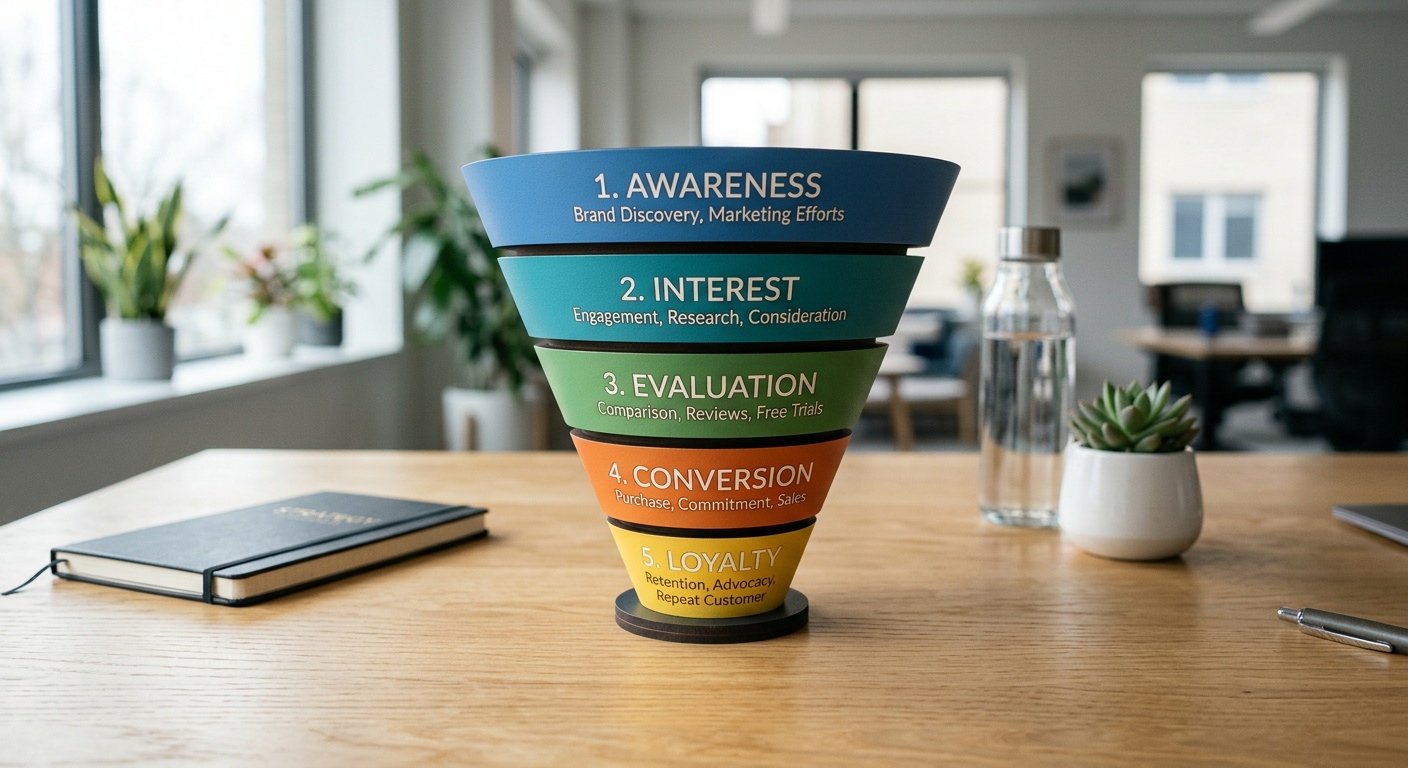
Building a Data-Driven Marketing Funnel for Fast-Growing Startups
Reading time: 9 minutes
Table of Contents
- Why Most Startup Funnels Leak Money in 2026
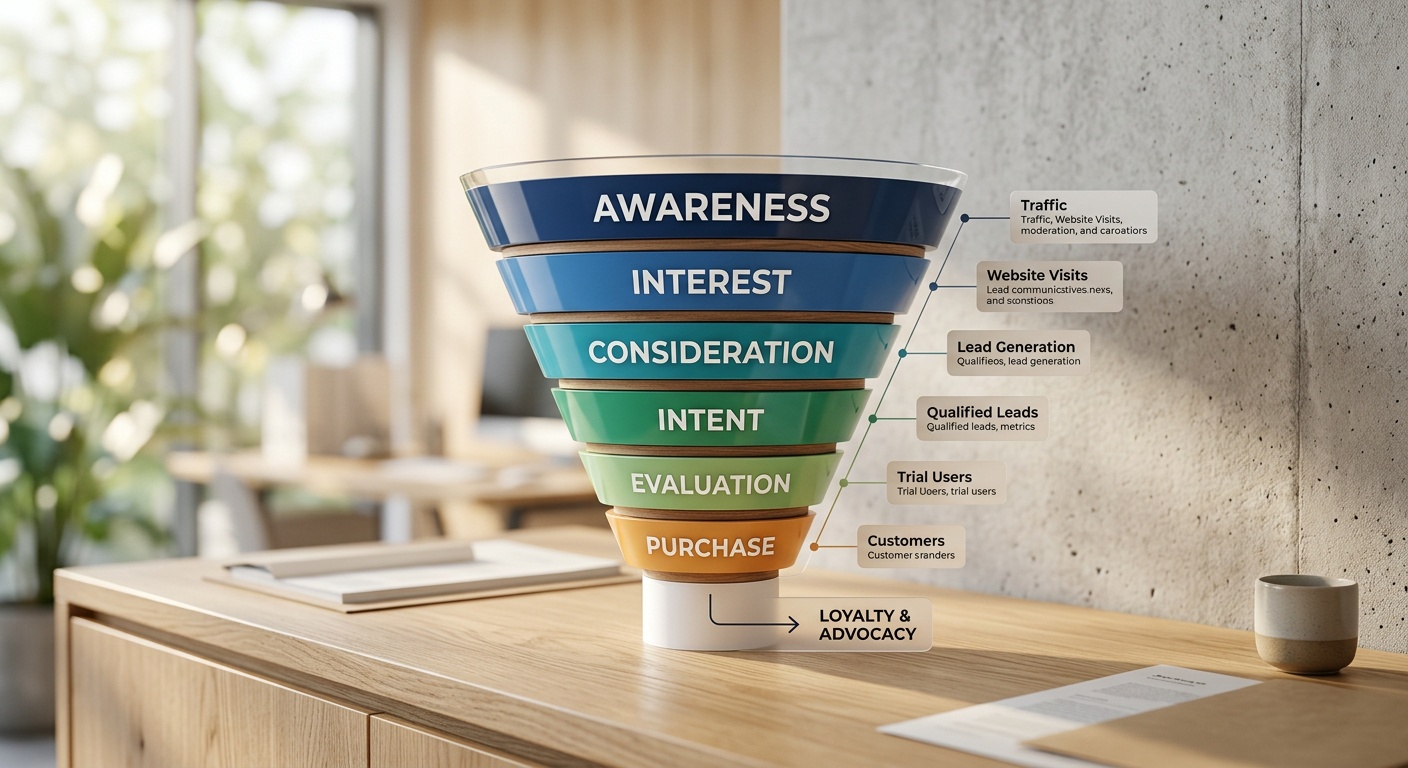
- The Anatomy of a Data-Driven Funnel
- Stage 1: Attribution-First Awareness
- Stage 2: Behavioral Nurturing
- Stage 3: Predictive Conversion
- Common Challenges (and How to Fix Them)
- Funnel Benchmarks: A Comparative Look
- FAQs
- Your Roadmap Forward
Ever poured budget into ads, watched traffic spike, and then wondered why revenue barely moved? You’re not alone. In 2026, with customer acquisition costs up nearly 22% year-over-year across SaaS and DTC sectors, guessing your way through a marketing funnel is a luxury fast-growing startups simply can’t afford anymore.
Let’s break down what a genuinely data-driven funnel looks like today—not the theoretical version from a 2019 growth-hacking blog, but one built for AI-assisted buyer journeys, privacy-first tracking, and shorter attention spans.
Why Most Startup Funnels Leak Money in 2026
Here’s the straight talk: most funnels don’t fail because of bad creative or weak copy. They fail because of disconnected data. Marketing teams track clicks, sales teams track deals, and product teams track usage—rarely in the same system, rarely with shared definitions of “qualified.”
According to a 2026 Gartner CMO survey, 68% of marketing leaders at startups under 200 employees say they still can’t confidently attribute revenue to specific campaigns. That’s not a tooling problem anymore—most startups have HubSpot, Segment, or Mixpanel. It’s a process and ownership problem.
“The funnel isn’t broken because of missing data. It’s broken because nobody owns the handoffs between stages,” says Priya Raman, VP of Growth at a Series B fintech startup that cut CAC by 31% in 2025 by simply assigning stage owners.
The Anatomy of a Data-Driven Funnel
A modern funnel isn’t a straight line—it’s a feedback loop. Data flows both ways: forward to guide targeting, and backward to refine what “qualified” even means. Three components make this work:
- Unified event tracking across web, product, and CRM
- Lead scoring models that update weekly, not quarterly
- Closed-loop reporting connecting ad spend to closed revenue
Stage 1: Attribution-First Awareness
Before you spend a single dollar on ads, define your attribution model. Multi-touch attribution (MTA) is making a comeback in 2026 thanks to server-side tracking and clean rooms replacing cookie-based methods post-privacy regulations. Startups using multi-touch models report 18% more accurate CAC calculations than those relying on last-click attribution alone.
Quick Scenario: Imagine you’re running paid social, SEO content, and a podcast sponsorship simultaneously. Last-click attribution will tell you social “won” the sale—but the podcast may have driven initial awareness three weeks earlier. Without multi-touch data, you’d cut the podcast budget and lose your top-of-funnel engine.
Stage 2: Behavioral Nurturing
Once a lead enters your ecosystem, generic drip emails won’t cut it anymore. In 2026, behavioral triggers—based on product usage, page revisits, or email engagement—drive 3x higher conversion rates than static nurture sequences, per a recent Salesforce State of Marketing report.
A practical example: Lattis, a mid-market HR-tech startup, restructured its nurture flow around trigger events (like a prospect visiting the pricing page twice in 48 hours). Within two quarters, their marketing-qualified-to-sales-qualified conversion rate jumped from 14% to 27%.
Stage 3: Predictive Conversion
This is where AI genuinely earns its hype. Predictive lead scoring models—trained on your historical closed-won and closed-lost data—now outperform manual scoring by a wide margin. Startups using predictive scoring in 2026 see sales teams spending 40% less time on unqualified leads, freeing them to focus on deals likely to close.
Common Challenges (and How to Fix Them)
Challenge 1: Data Silos Between Marketing and Sales
Fix: Implement a shared CRM field taxonomy before adding more tools. Agree on definitions—what counts as an MQL, SQL, and opportunity—in a single document both teams sign off on.
Challenge 2: Vanity Metrics Masking Real Performance
Fix: Replace “impressions” and “clicks” dashboards with pipeline-influenced revenue as your north star metric. It’s harder to track initially but far more honest.
Challenge 3: Attribution Breaking Due to Privacy Changes
Fix: Invest in first-party data collection—gated content, product trials, and community engagement—rather than relying solely on third-party pixels that are increasingly restricted.
Funnel Benchmarks: A Comparative Look
| Funnel Stage | 2023 Avg. Conversion | 2026 Avg. Conversion | Key Driver |
|---|---|---|---|
| Visitor → Lead | 2.1% | 2.9% | Interactive content, AI chat capture |
| Lead → MQL | 22% | 31% | Behavioral scoring |
| MQL → SQL | 14% | 24% | Predictive lead models |
| SQL → Customer | 19% | 23% | Sales enablement content |
| Customer → Expansion | 11% | 17% | Product usage data triggers |
Visualizing the Conversion Lift
Bringing It Together: A Real-World Snapshot
Take Nordlight, a Baltic-based B2B SaaS startup that scaled from €500K to €4.2M ARR between 2024 and 2026. Their turning point wasn’t a bigger ad budget—it was consolidating seven disconnected tools into a single data pipeline feeding one dashboard. Within six months, their sales cycle shortened by 19 days, and marketing-sourced pipeline grew from 34% to 58% of total revenue.
The lesson? Tool consolidation and shared metrics often outperform simply spending more. Growth isn’t purely a budget problem—it’s an alignment problem disguised as one.
FAQs
How much data do we really need before building a funnel model?
You don’t need millions of data points—you need clean, consistent data. Startups with even 200-300 closed deals can build a reliable predictive scoring model, provided the data fields are standardized across marketing and sales.
Should early-stage startups invest in marketing attribution software immediately?
Not necessarily. If you’re pre-Series A with limited channels, a well-maintained spreadsheet combined with UTM discipline can outperform expensive attribution platforms. Invest in dedicated tools once you’re running four or more concurrent acquisition channels.
What’s the biggest funnel mistake fast-growing startups make in 2026?
Optimizing the top of the funnel while ignoring the middle. Startups often chase more traffic and leads without fixing leaky nurture and handoff stages, which wastes the very budget they’re trying to stretch further.
Your Roadmap Forward
Building a data-driven funnel isn’t about adopting every new AI tool that launches this quarter—it’s about disciplined alignment between the teams that touch your customer’s journey. As buyer behavior grows more fragmented across channels, the startups that win will be the ones treating data infrastructure as seriously as product development.
- Step 1: Audit your current attribution model and identify where data breaks between teams.
- Step 2: Define shared MQL/SQL criteria with sales this week, not next quarter.
- Step 3: Implement one behavioral trigger campaign and measure its lift over 60 days.
- Step 4: Pilot a predictive scoring model on your existing CRM data.
- Step 5: Revisit your funnel benchmarks quarterly, not annually.
Wherever your startup sits today—pre-seed chaos or Series B scaling—the question isn’t whether you have enough data. It’s whether you’re brave enough to let that data challenge what you assumed was working. So, what’s the first leak you’re going to fix this month?